Automation of hybrid electric vehicle design process using Aras Innovator and pSeven Enterprise
Industry: Automotive | Product:  pSeven Enterprise
Introduction
Designing a hybrid electric vehicle engine is a complex process involving experts from various engineering disciplines, each using their own simulation and design methods. As engineers from different departments are involved in the design process, issues can arise during data preparation, simulation and result exchange due to problems with data transfer and communication. These inefficiencies can significantly increase the overall design lead time.
pSeven Enterprise enables engineering processes to be captured in a complete simulation sequence, thereby formalizing the methodology effectively. Once the process has been captured, it can be automated and performed as a repeatable, executable workflow. This helps not only to store the complete methodology, but also to enable automated simulation campaigns, reuse for new studies and optimization tasks, and to enable the seamless transfer between individuals. The platform facilitates the external utilization of these workflows, enabling PLM systems to execute them automatically, collect simulation results and track requirement satisfaction.
This article showcases pSeven Enterprise's capabilities as a collaborative platform for formalizing and automating multidisciplinary fuel consumption analysis of hybrid electric motors. It presents this process as a ready-to-use, verified tool and demonstrates the platform's integration capabilities and the effective use of the tool within the Aras Innovator PLM system (fig.1).
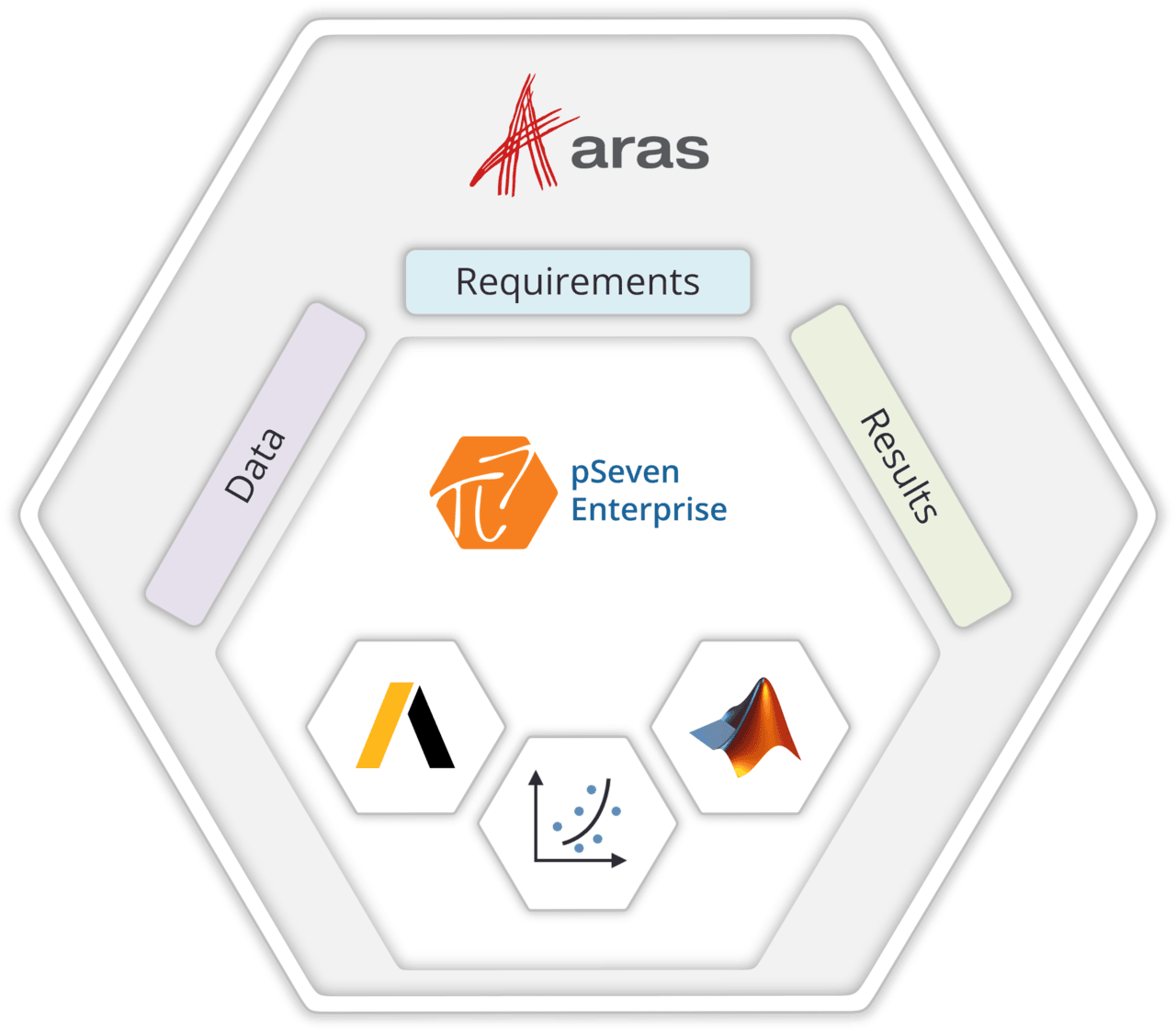
Figure 1. Methodology infrastructure
Formalization and automation of the multidisciplinary simulation
In this use case, the evaluation of hybrid engine fuel consumption involves two engineering departments. The first department prepares and evaluates the squirrel cage motor model for electromagnetic analysis, providing torque and efficiency values at a given rotor speed. The second department computes the motor’s fuel consumption using a simulation model of its performance. This model calculates consumption values based on the driving pattern provided and the motor’s efficiency map. Rotor torque and efficiency values are computed using 2D electromagnetic transient analysis in Ansys Maxwell, while consumption efficiency is evaluated using a 1D Simulink model (fig.2).
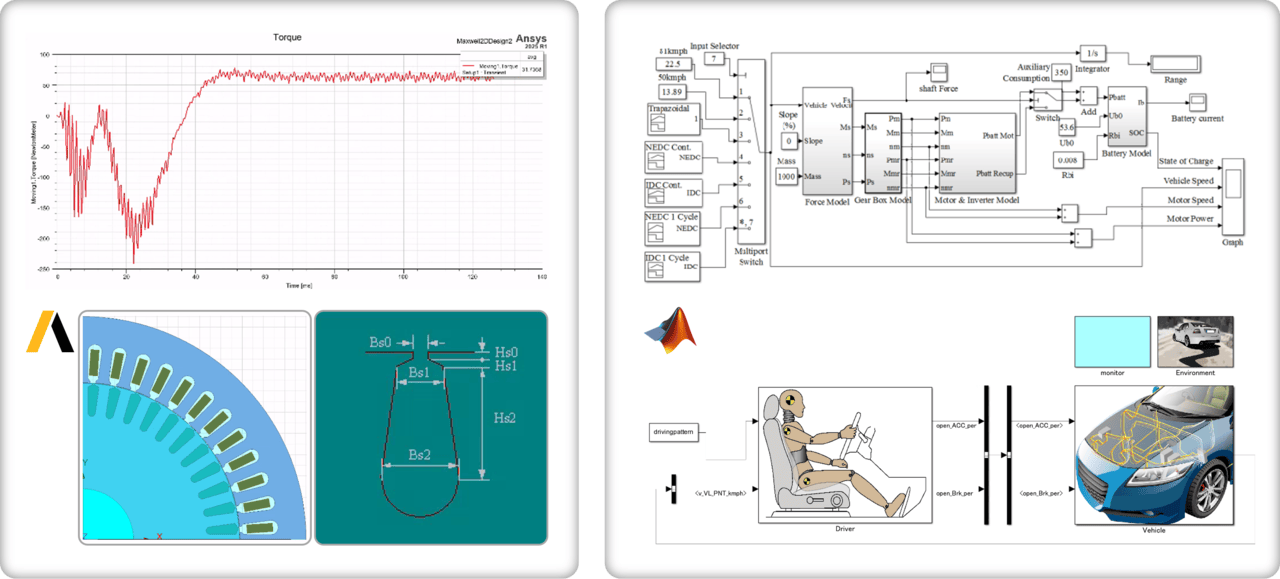
Figure 2. Simulation models
The overall analysis involves several requirements. From an industrial perspective, the methodologies must be reusable for different engine geometries. Obtaining the efficiency map requires numerous computations at different rotor speeds, as well as complex post-processing to extract the efficiency map. Meanwhile, optimizing consumption efficiency over driving scenarios provides a quick way to evaluate the efficiency map at various points.
pSeven Enterprise formalizes analysis at the required level of generalization and represents it as an automated, executable workflow. Furthermore, the platform provides the means to define not only how to execute the simulation, but also where to execute it (i.e., computational resources) and who will execute it (i.e., roles and permissions).
The platform offers dedicated integration that satisfies the need to perform automated Ansys Maxwell simulations with various rotor speed and geometric parameter values without scripting. It also allows users to present the simulation model as a workflow block, where the simulation and geometry parameters serve as inputs and the resulting values serve as outputs.
Multiple parametric studies require an efficient and automated process for setting parameter values and collecting simulation data. The Design of Experiments platform functionality, in turn, enables the acquisition of comprehensive statistics with a limited number of simulations.
Due to the computational expense of EM simulations, generating an efficiency map is time-consuming. This creates a need for automation and an efficient algorithm to obtain the map. pSeven Enterprise can achieve this by creating lightweight predictive models based on accumulated simulation data. Consequently, the predictive model enables the rapid generation of the necessary efficiency map.
This use case involves evaluating different vehicle driving scenarios based on a given motor efficiency characteristic through a formal parametric process. The Simulink integration block allows users to modify design parameter values and run simulation models.
The functionalities mentioned above in pSeven Enterprise facilitate the transition from single-run workflows to multi-simulation studies.
Thus, the hybrid electric vehicle study is presented as a three-part workflow. The first part involves gathering EM simulation data for a specified motor geometry using Ansys Maxwell integration with a Design Space Exploration block configured for Design of Experiments (fig.3).
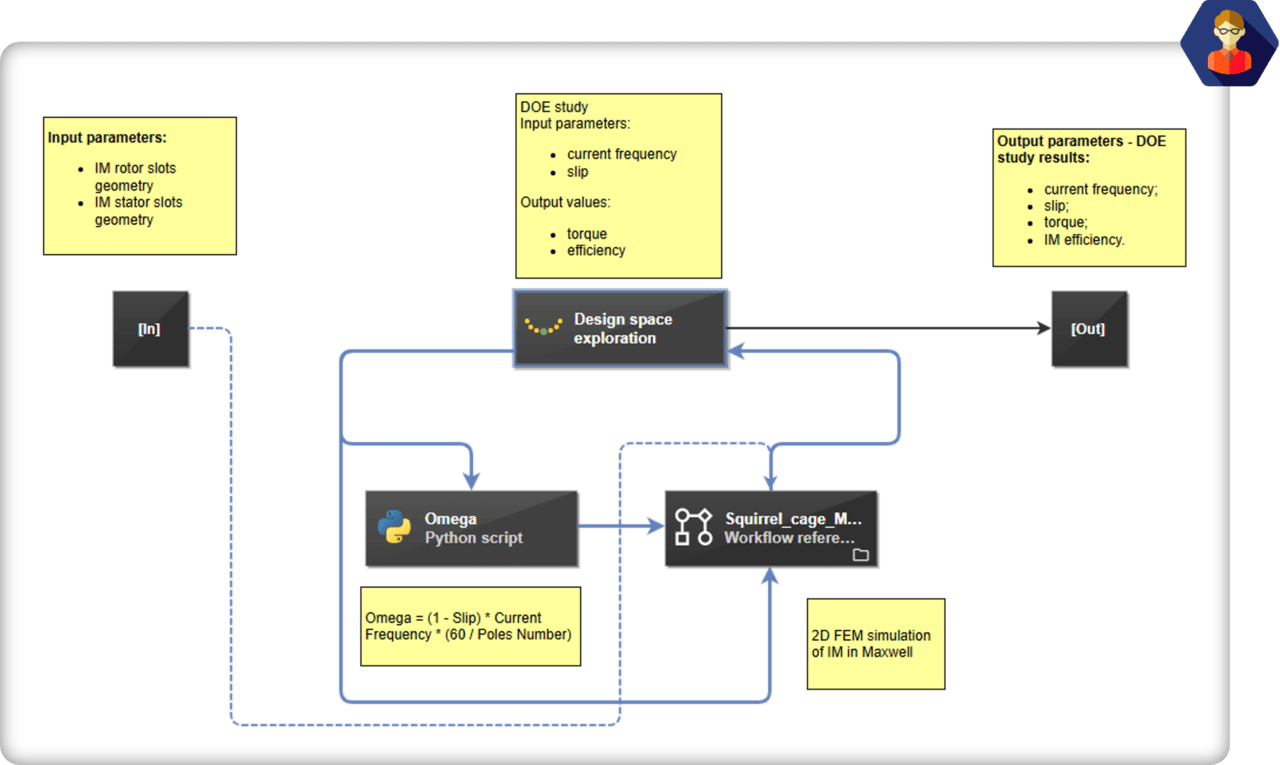
Figure 3. Design of Experiment for Ansys Maxwell simulation workflow
The second part consists of creating a predictive model using Model Builder block and rapidly obtaining the efficiency map (fig.4).
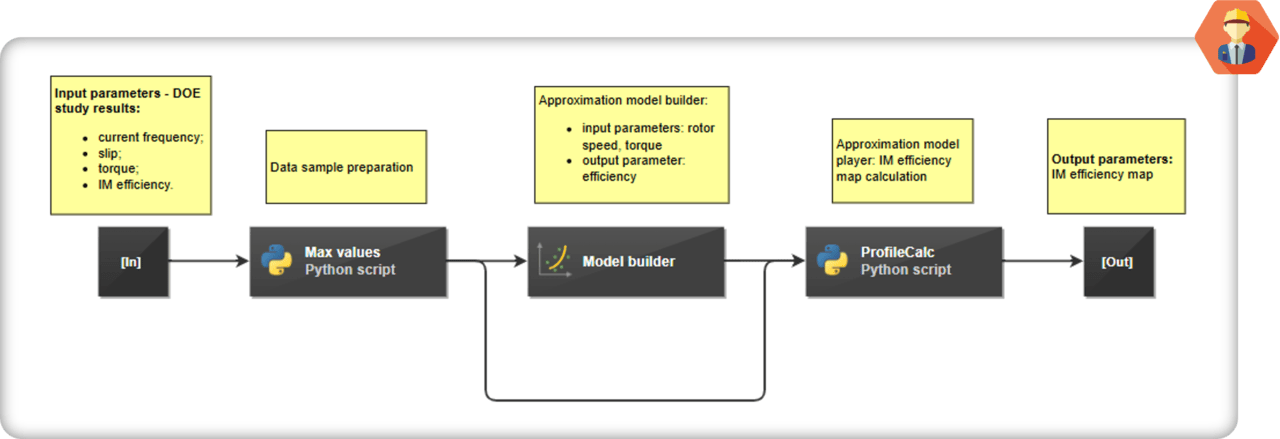
Figure 4. Creating predictive model and generating efficiency map workflow
The third part focuses on evaluating fuel consumption using a Simulink integration block with a provided driving pattern and efficiency map (fig.5).
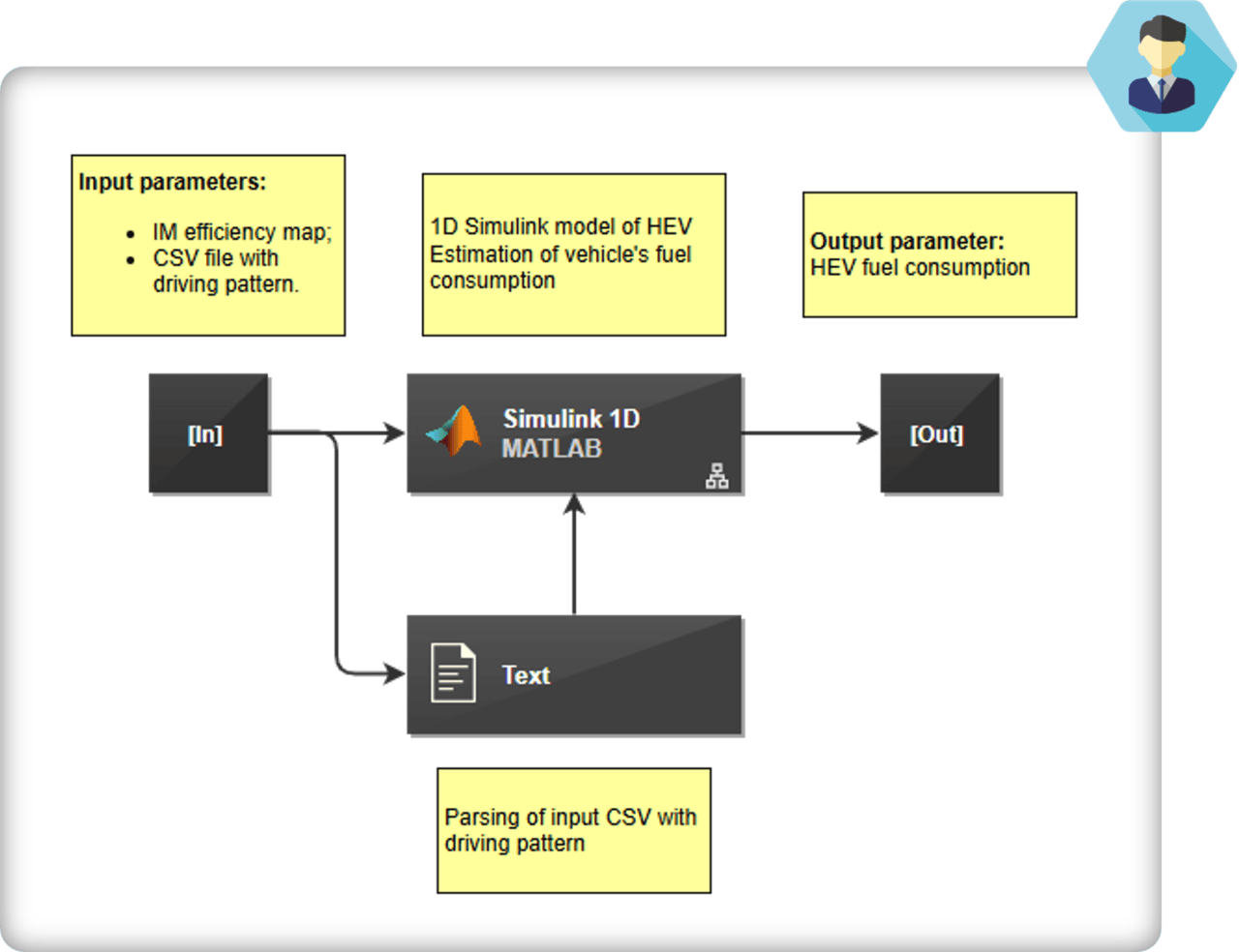
Figure 5. Simulink model workflow
As a collaborative platform, pSeven Enterprise provides the capability to separate the work of engineers from different departments and develop their independent workflows. Finalized workflows can be distributed to other participants, such as engine computation managers.
The workflow on fig.6 combines the main engine computation process with a shared 2D electromagnetic model computation, efficiency map formatting, and 1D consumption computation. Additionally, the Word integration block generates a study report according to the desired structure.
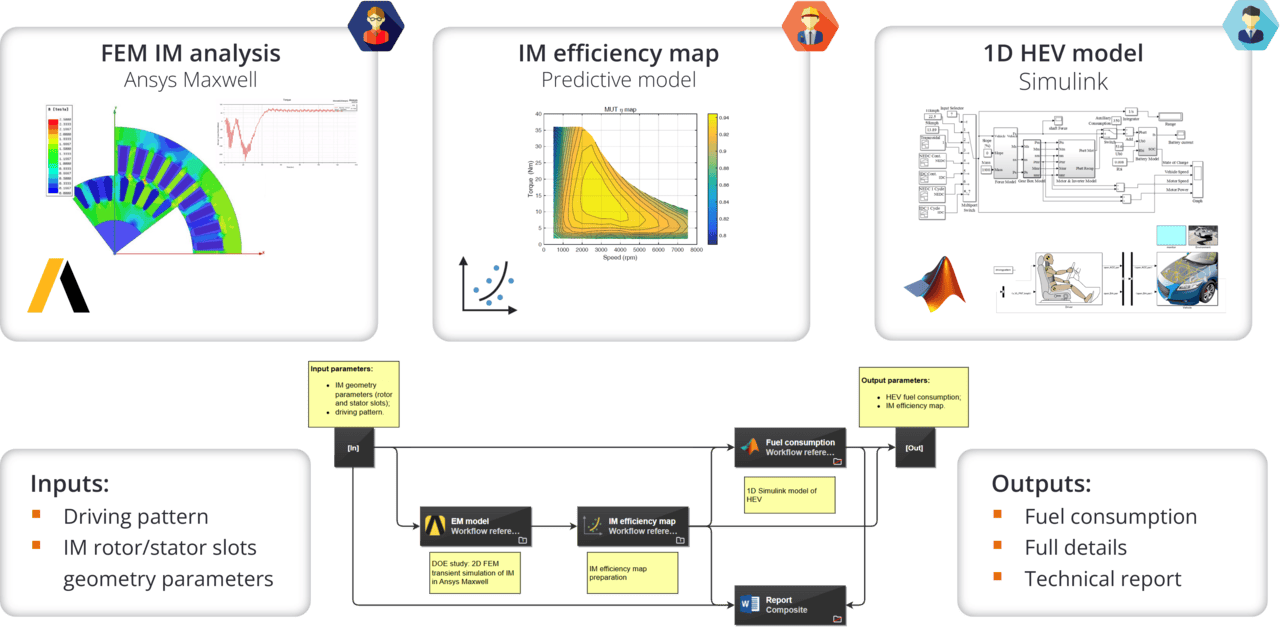
Figure 6. Consumption evaluation workflow
The main workflow can be used to calculate the engine's fuel consumption for a specified squirrel cage rotor geometry and vehicle driving pattern. This verified, ready-to-use workflow can be shared or published as an app for third parties.
Integration with PLM / SPDM systems
Contemporary product design relies on a PLM system for data storage, version control, and requirements management. Engineers also require the ability to perform simulations for modified versions of existing products and entirely new designs for emerging markets. Using ready-made verified applications significantly accelerates the design process.
pSeven Enterprise enables seamless integration of its ready-made workflows into external platforms as simulation services. In this use case, we demonstrate the custom pSeven Enterprise integration with the Aras Innovator PLM system. This integration allows users to seamlessly utilize pSeven Enterprise workflows in the Aras Innovator’s Simulation Tasks to generate results from input data stored in Aras. The integration provides a secure and easy-to-use mechanism for operating with pSeven Enterprise workflows.
When an engineer needs to evaluate new data using a standard scenario, he or she can easily perform the study by selecting the appropriate workflow from the list and specifying the new input files and parameter values. The integration mechanics organize workflow execution and extracting / storing of the simulation results from pSeven Enterprise back to Aras Innovator. These operations are handled automatically, so the user only needs to focus on configuring the input data and analyzing the simulation results in the PLM system.
When performing the fuel consumption study in Aras Innovator using the pSeven Enterprise integration, engineers can configure the rotor geometrical parameters, select the driving pattern file, and specify where to save the output result file in Aras Innovator.
After a successful workflow run, the report file and consumption values are stored in Aras Innovator, enabling engineers to draw conclusions about the engine design. This seamless integration also allows the engineer to include requirements for the corresponding simulation results and trace satisfaction of these requirements after each workflow run. It also enables the engineer to assess the impact of requirement edits.
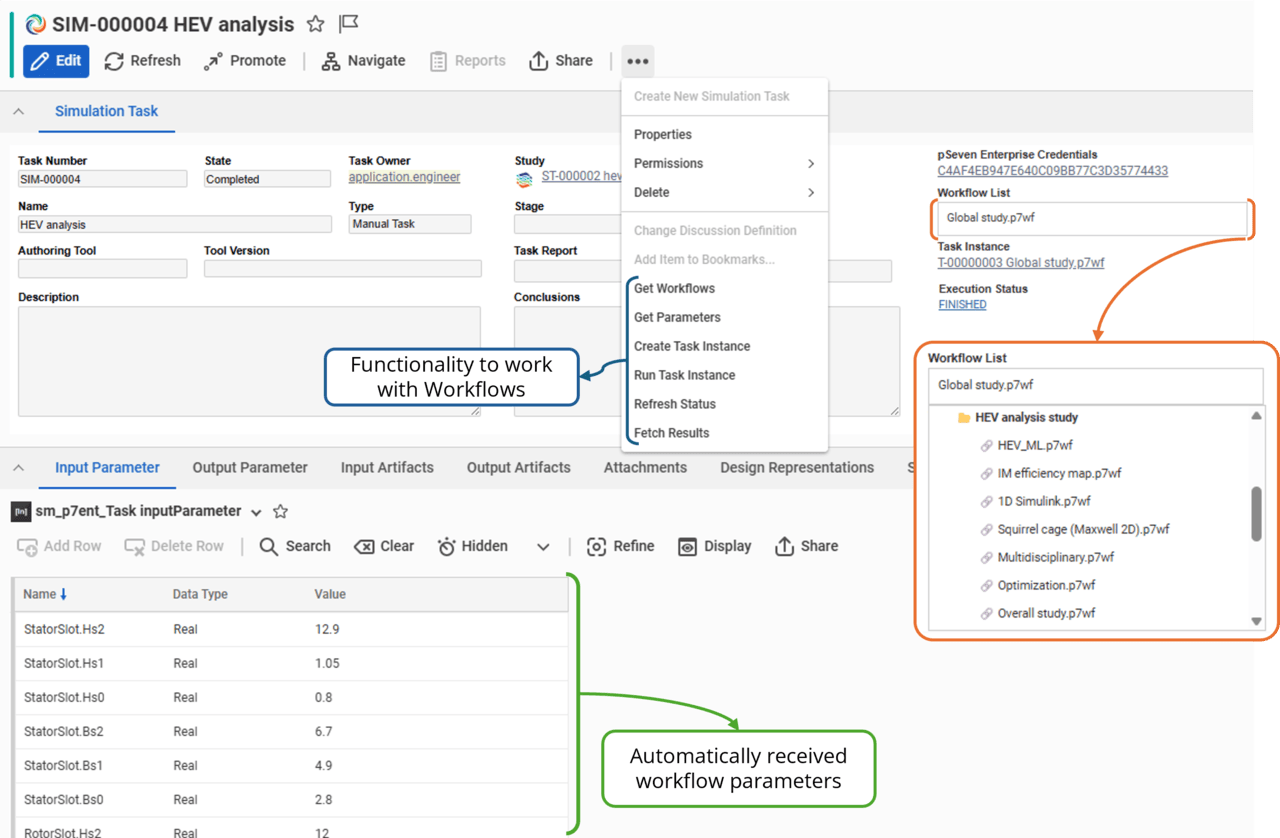
Figure 7. pSeven Enterprise integration in Aras Innovator: functionality to work with workflows
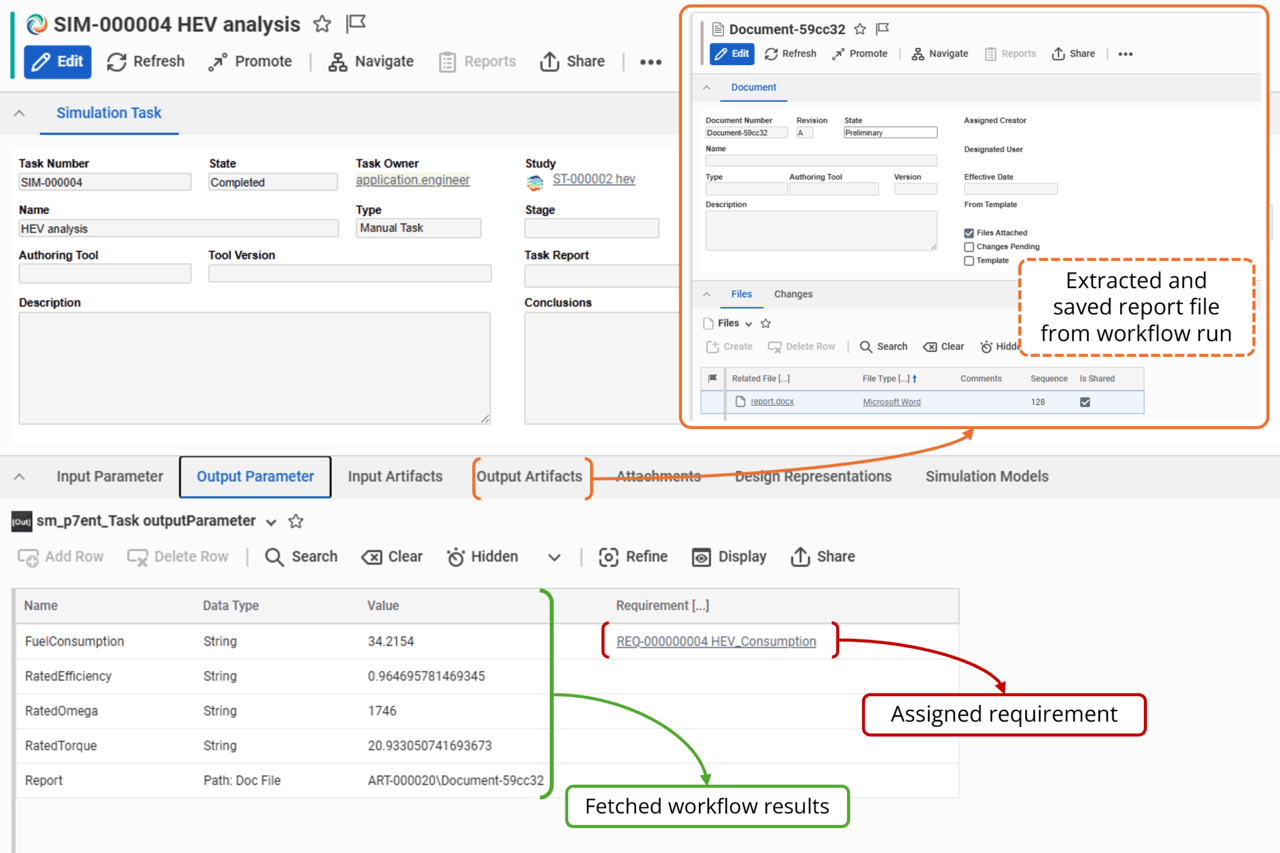
Figure 8. pSeven Enterprise integration in Aras Innovator: result files and output values
Conclusion
This article showcases pSeven Enterprise's capabilities as a collaborative platform for creating automated workflows based on formalized methodologies. These workflows significantly accelerate product design and facilitate the presentation, storage, and use of engineering processes across departments.
A workflow assembled from components verified by the relevant enterprise specialists eliminates potential human error and enables third parties without the same competencies to use it. Using such workflows as ready-made tools in PLM systems enables engineers to evaluate various designs on a large scale with fully reproducible simulation processes, monitor requirement satisfaction, and trace the entire design process. This approach provides an effective way to verify new variants of existing products using simulation or to develop new products for emerging markets.